What Gives, Liz Phair?: Tending the Garden Chorus
My love for sound began in utero. Recently, I learned that my mother played music for me while pregnant. When I’ve asked what she’d play, she lists Motown, country, some jazz, and Bertie Higgins. That’s right, the Trop Rock dude of Key Largo fame. I can picture my fetal self covering my ears while Jamaica Me Crazy echoed in my tight quarters.
Truth is, my mother’s heartbeat was probably the first melody to reach my ears. That same heart would love me through countless challenges I’d face throughout my life and continues to beat unconditional love despite all my shortcomings. She was the one who planted the seed for a love of music to last a lifetime, and while Bertie didn’t stick, my fondness for The Beatles and other music she introduced me to did. But like most love stories go, it’s complicated. My relationship with sound is complex–a mixture of passion and pain, challenges and creativity.
But let’s start at the beginning. This is going to be a long one, but stay with me…and grab some headphones.
This post humbly offers a sonic experience.
Click the links (bold and italicized) throughout the text to listen to full songs associated with each moment.
A Sonic Biography
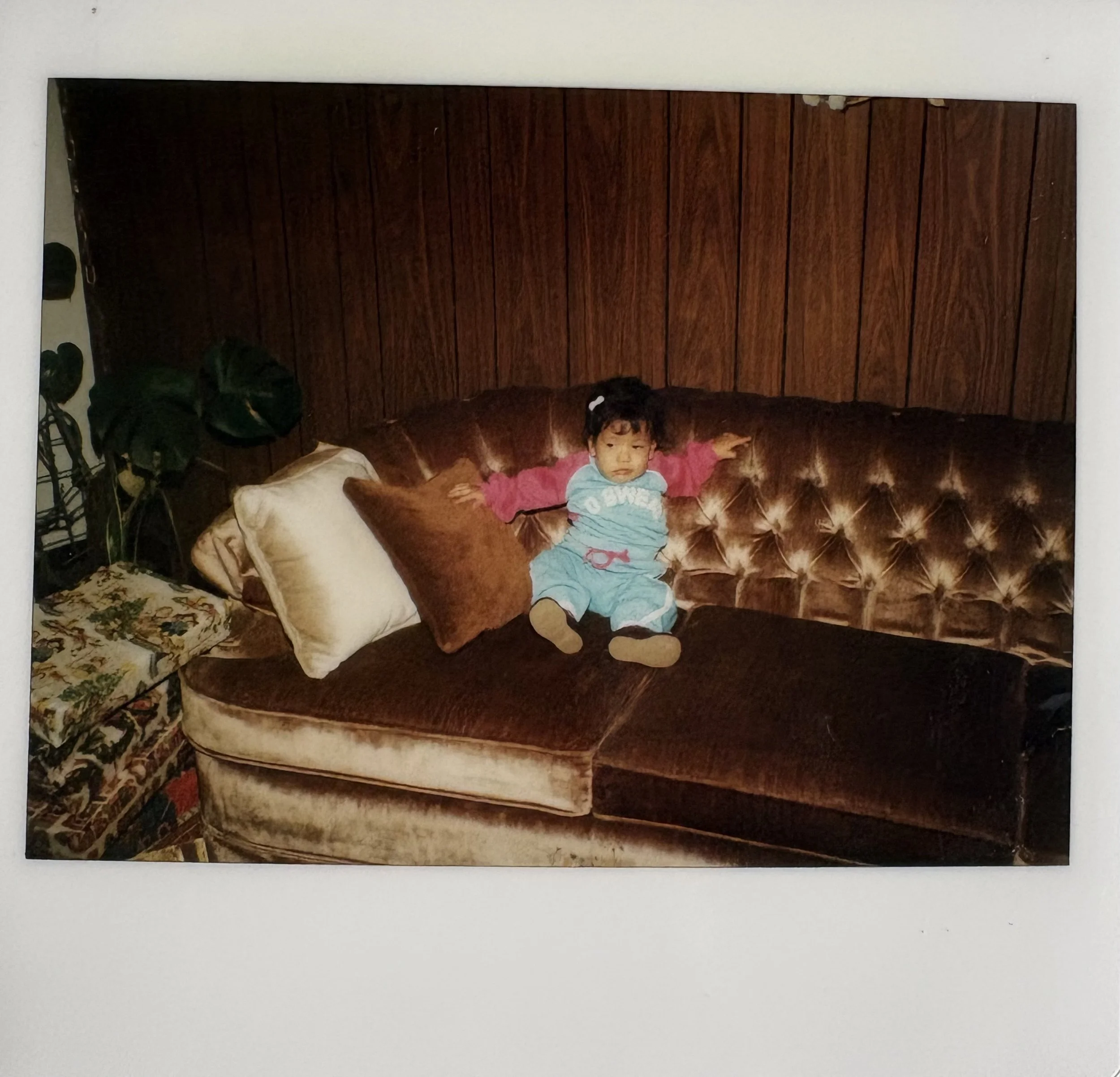
My memories are scored by song. Truth can be skewed by what our brains and ears recall, but this is how I remember it all.
My ears had a rough start. At age four, tubes were inserted due to recurring infections. Around the same age, they removed my tonsils. I still remember being wheeled into the operating room, being told to count back from 100 and panicking because I couldn’t count that high yet. As an asthmatic, my labored wheezing, the calm hum of a nebulizer, and the vibrating pounding on my back as my respiratory therapist father loosened the mucus in my lungs are all memories of childhood illness reflected in sound. But so is childhood comfort.
At night, as she tucked me in, my mother sang to me, “see you in the morning, see you in the evening, see you in the light of day,” to the tune of the McGuire Sisters’ Sugartime. I spent a lot of time alone in my room, letting my imagination guide my play and listening to music. Sitting on the floor in front of my Fisher Price cassette player I’d listen to an oldies mix my older sister gave me, eyes closed and swaying to The Elegants’ Little Star. Sesame Street provided a mixed bag of bangers like The Ladybugs’ Picnic and the Waylon Jennings and Big Bird duet Ain't No Road Too Long from Follow That Bird. Much to my mother’s confusion, I loved Billie Holiday–thanks to my late Uncle Louie, a writer and poet. And rounding things off, my father introduced me to Pink Floyd, Led Zeppelin, and The Doors. Music always filled the house–from our living room stereo to my older sisters’ bedrooms, which they often locked me out of.
Growing up in a Mexican American family, Spanish was all around. My grandmother would yell “¡Te caes!” (“you’ll fall!”) over and over as I climbed on top of her patio furniture. Perched on the table, I’d stare back blankly wondering what she was freaking out about. But despite my lack of fluency, the music I heard in her house and at home needed no translation. These songs were a sonic connection between myself and my roots. Live mariachi music, especially the powerful women singers, still renders time insignificant and strikes an emotional chord deep inside me. Rocio Durcal’s version of Amor Eterno reminds me of my grandparents, who have both passed and, despite all the ups and downs that make up their story, exemplify the ultimate eternal love in my eyes. Oddly enough, one of my earliest musical memories is hearing Juan Gabriel’s Querida, which has a horn part at the end that just slaps. And one cannot downplay Juanga’s ability to dance around that many candles in a highly flammable sweater and come out totally unscathed. Legendary.
My youth also came with an essential introduction to pop music. Madonna was a staple, and I still insist Like a Prayer is one of the best pop songs ever produced (despite numerous debates I’ve gotten into with a certain librarian I once worked with). I remember sitting in the backseat of our minivan as my mother played this masterpiece on cassette. And even the holidays came with their own timeless classics. Gather around the hearth for that one. As I matured, my tastes refined. First heard on the school playground, I maintain Ace of Base’s The Sign deserves a place in the Smithsonian. Life really IS demanding without understanding.
Music also casted a darker shadow on my childhood. I can’t remember when or where I heard Seasons in the Sun for the first time, but it weighed heavy on my little heart. “Goodbye, Michelle, it’s hard to die, when all the birds are singing in the sky.” Terry Jacks was singing directly to me, and it creeped me out. Or “Goodbye, Papa, please pray for me, I was the black sheep of the family,” as, more than ever, I feel like the black sheep of my own.
As a 90s kid, alternative music was my saving grace. Television offered an early education with shows like The Adventures of Pete and Pete, with the dopest theme song and cameos by legends like Debbie Harry, Michael Stipe, Kate Pierson, and Iggy Pop. But one of my most significant memories involves a game of hide and seek with the lights off. Panically running around trying to find a place to hide, The Cranberries’ Ode to My Family echoed throughout my best friend’s house–a babysitter’s choice, no doubt. Tucked in my hiding spot, my ears were serenaded by Dolores O’Riordan’s iconic voice, which would serve as a soundtrack for the rest of my life. Her distinct Irish keening and lyrics longing for her childhood were a lullaby in that moment in the dark. To this day, when I can’t sleep, Dreaming My Dreams calms my racing thoughts. When Dolores passed away unexpectedly in 2018, I was completely shattered. It can be difficult to sit with the reality that the people who brought you the most peace also struggled to find it themselves.
In the summer of 1995, we took a family road trip to California. Piled into a van, we visited the usual sites and amusement parks. But what I remember most is falling asleep on the road with the radio playing. Ok, I also remember this burger at Sloopy’s in Manhattan Beach that lives rent-free in my mind three decades later. It had a soft poppy seed bun…poppy seed, y’all. But back to the van. As my eyes grew heavy, a voice came over the airwaves. She wanted someone to know that she was happy for them, she wished nothing but the best for two people. Well, that’s nice. Then, boom! Alanis Morissette’s You Oughta Know exploded through the speakers. It was raw, it was loud, it was angry…it was awesome. Jagged Little Pill is heralded as a groundbreaking album of the 90s for a reason, and it seemed almost every kid in my school had a copy. Later that year, No Doubt’s Tragic Kingdom was released. I remember first seeing the music video for Don’t Speak, glued to our television. Gwen Stefani was cool, moody, and her voice evoked a heartache I knew nothing about…yet. I was lucky enough to grow up when we didn’t have social media, could roam our neighborhoods freely and play in ditches, and women were kicking ass and taking names.
By 1997, I was all in, expanding my tastes, mixed tape collections, and budding angst. That spring, my father took me to see Bush at the El Paso County Coliseum. What I remember most about that night, besides the crowds and a distinct smell in the air, was the opening act, Veruca Salt. I watched wide-eyed as Nina Gordon and Louise Post let it all out onstage performing Seether and new songs like Volcano Girls. With each new musical discovery, sonic booms were blasting through my headphones, and I was pumped. I was coming of age, and life was looking up…well, you know, minus the remnants of puberty.
That same summer, my parents sat me down and told me they were getting divorced. Life in my home at that time was far from perfect. I had watched my oldest sister face circumstances that both confused and scared me, and a civil war was erupting between my mother and father. Lying face down on my bed with a pillow pressed so firmly into my ears that my head would hurt, I tried to muffle the sounds of them arguing in the next room more times than I can count. Yet, I still hoped this divorce was a nightmare I would eventually wake up from. I wouldn’t. My family would break apart, and I never felt like I had one ever again. I had parts of a family, here and there, spread out and incomplete. Sides were chosen, and, as the only biological product of their marriage, I was left in a lonely middle. As I entered high school that year, I put on a face, lied to my friends, and buried any emotions I felt as deep as I could. I felt responsible for my parents’ wellbeing and for the divorce itself–a guilt I carry to this day. I could have behaved better, and if I wasn’t around, maybe they could have had a cleaner break and wouldn’t be tied to each other forever on the account of my existence. I watched my father move on with his new family, while I watched my mother pick up the pieces in the only ways she knew how and with a strength I can only aspire to possess.
Music held me in a way no one else could. It offered an outlet and a salve, a distraction and a barricade to protect my heart from a world crashing around me. Kurt’s wail was a safety valve, screaming for me when I had to stay silent. Dolores, Alanis, Gwen, Nina, Louise, and others did the same, each telling me, in their own way, that everything would be ok…someday.
~~~
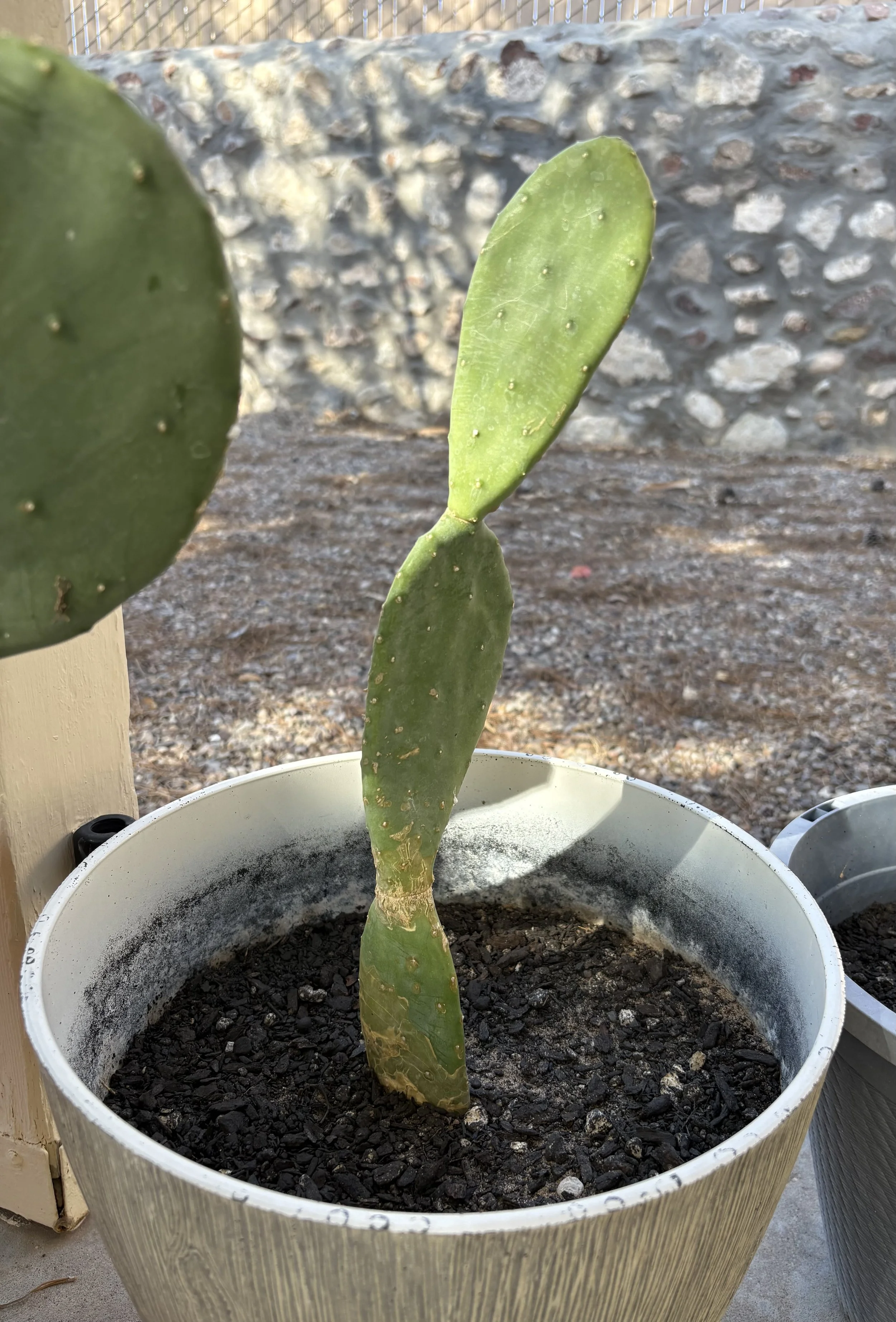
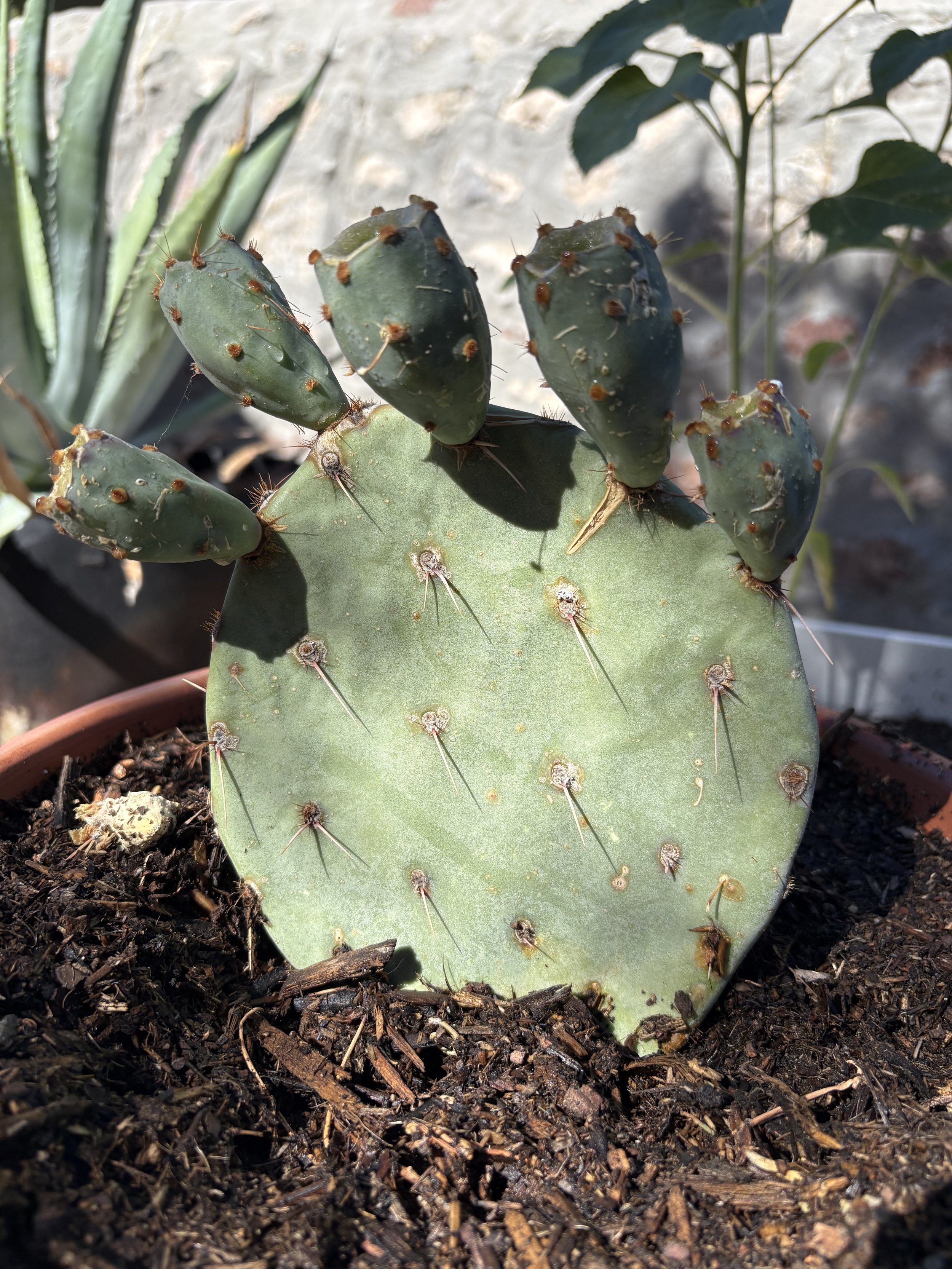
Since I was little, my grandmother taught me how to find calm and love plants. During loud summer storms, she’d hold me close and make me laugh. I’d race around her backyard on a little blue tricycle, riding through warm clean sheets hanging on the clothesline feeling them glide over my face, stopping to smell her mint, and squeezing behind my grandfather’s shed to suck the honeysuckle growing wild. For years, I’ve been tending my own backyard garden and supporting its ecosystem, as best as I can. This year, I rescued a handful of different species of Prickly Pear cacti from being tossed out and named them appropriately.
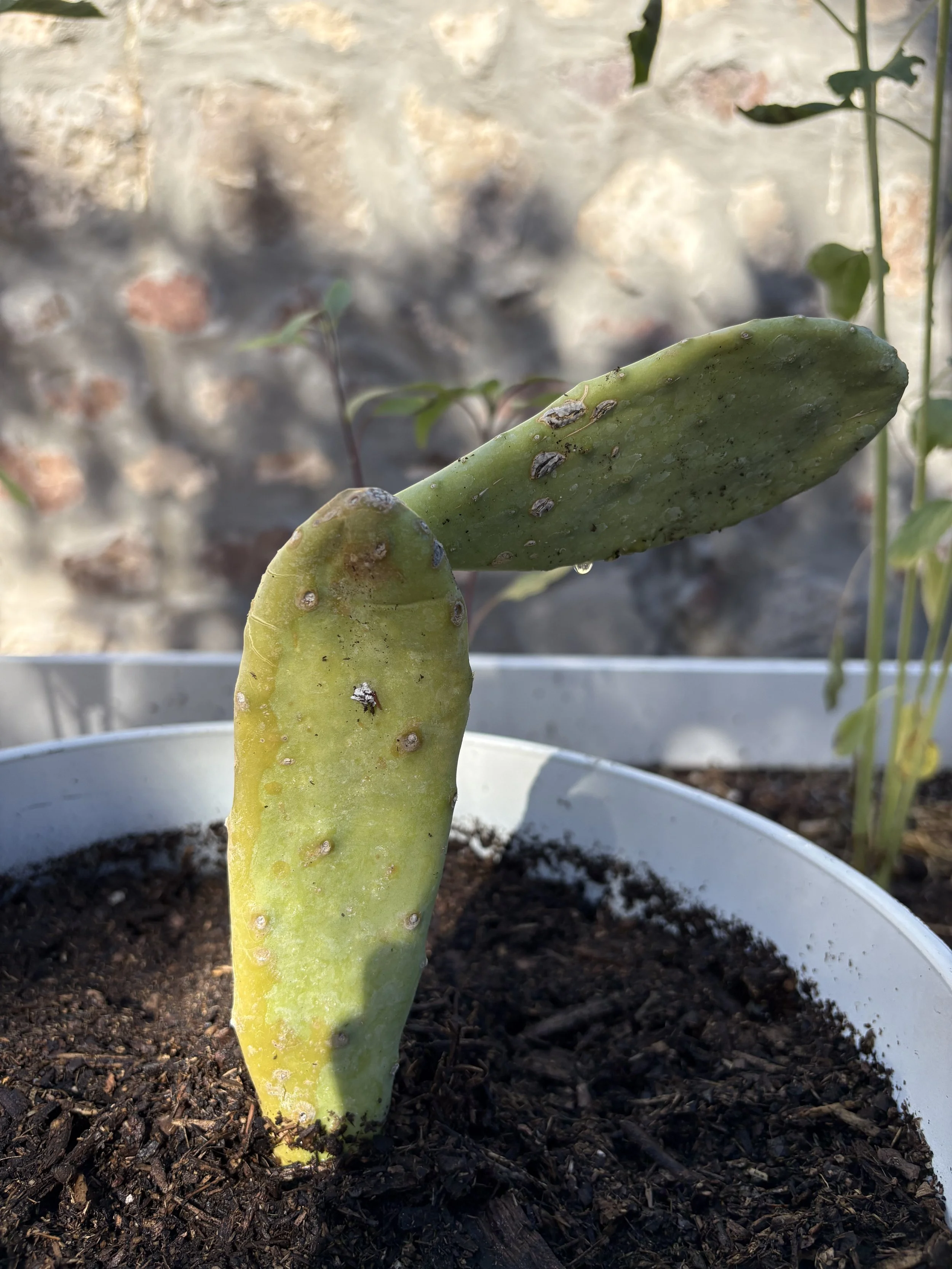
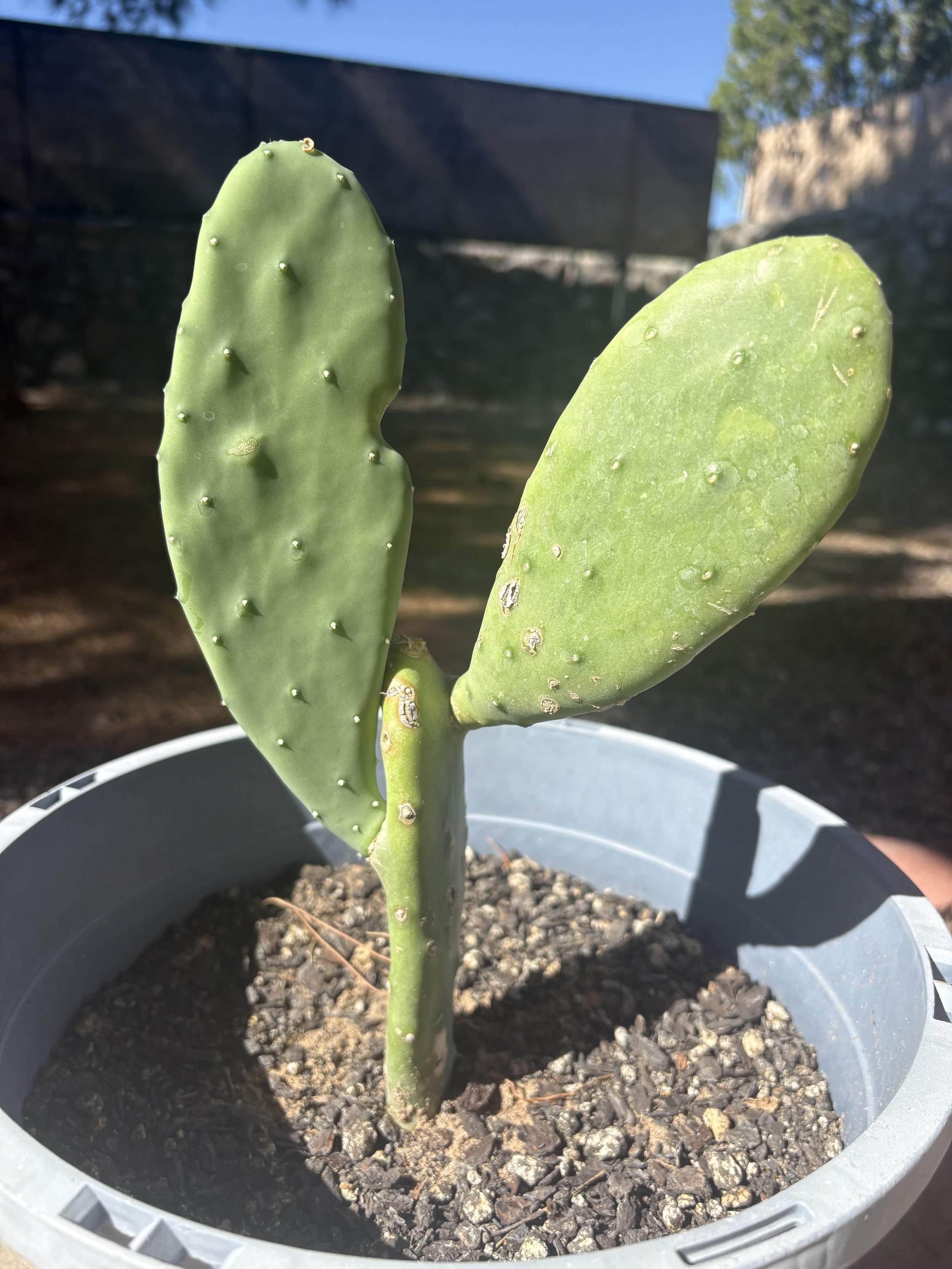
Dolores O’Riordan from May 2026 (top) to late September 2026 (bottom) with new growth and possibility
Alanis Morissette, strong and upstanding
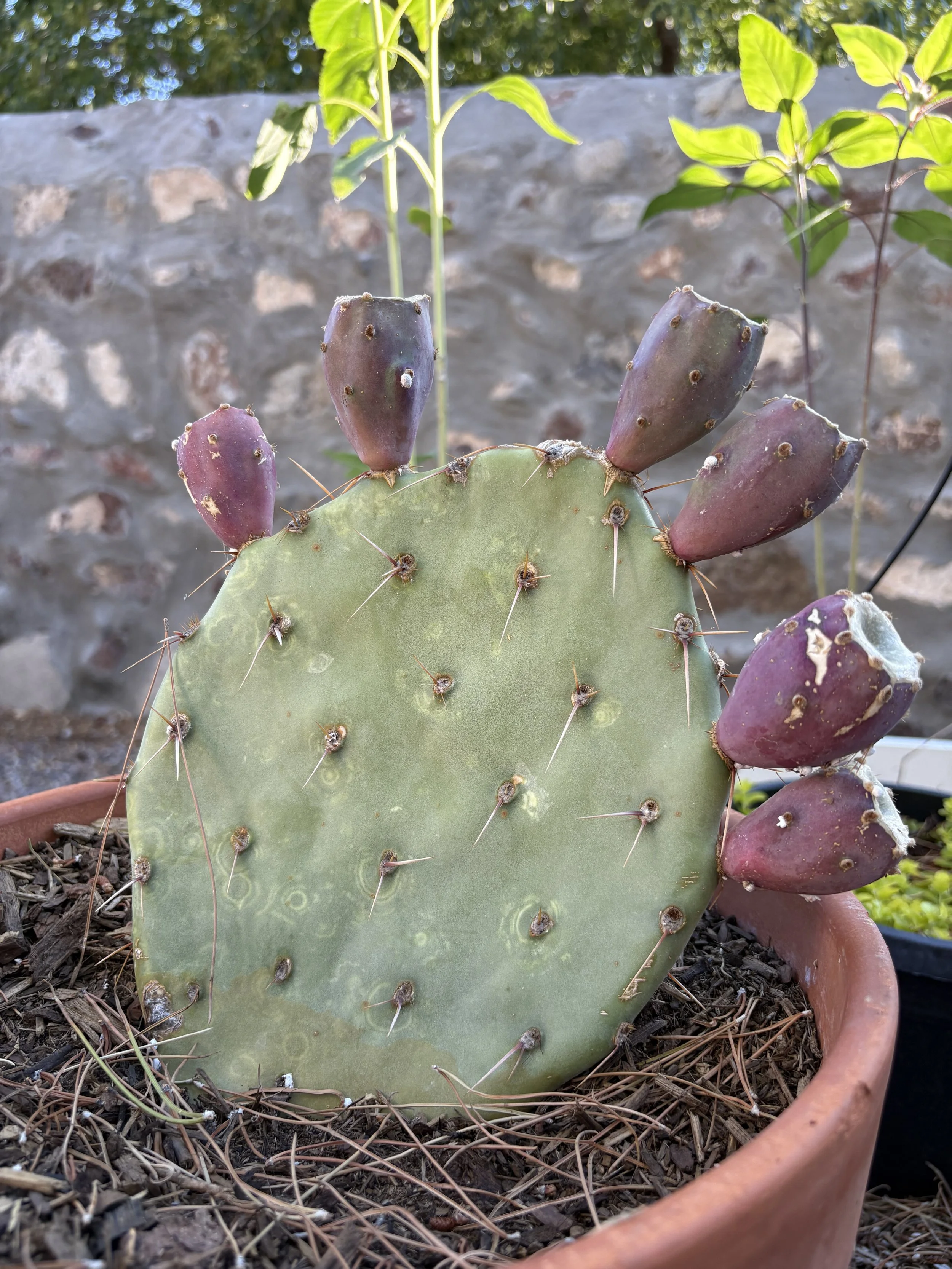
Louise Post (top) and Nina Gordon (bottom) prickly and radiant
We’ve been through a lot together so far. From a pest and soil emergency to occasional pokes, scrapes, and, sadly, some deaths, the ladies keep me on my toes, and I see my care as a symbolic act of repayment for all those years their music carried me through. I offer water, as needed, and gently scrub their pads free of cochineal when those little buggers show up uninvited. But as any desert dweller will tell you, these are still some of the most resilient plants around. As punk as you get, nopales withstand some of the harshest climate conditions, setting roots in the most unlikely and inhospitable places, with the scars to show it.
Fair Enough
While flipping through Hulu earlier this year, I randomly put on Lilith Fair: Building a Mystery for some background noise. Within minutes, I was transfixed by the stories told by Sarah McLachlan and others who organized and participated in the music festival that changed the lives of many–artists and audiences alike. I felt like a jerk thinking back to my own dismissiveness of Lilith Fair as a dumb teenager, despite having listened to many of those artists on the regular, including Sheryl Crow, Jewel, and Natalie Merchant, whose stories and voices calmed me in my tumultuous youth. If Kurt was wailing, Natalie was lulling.
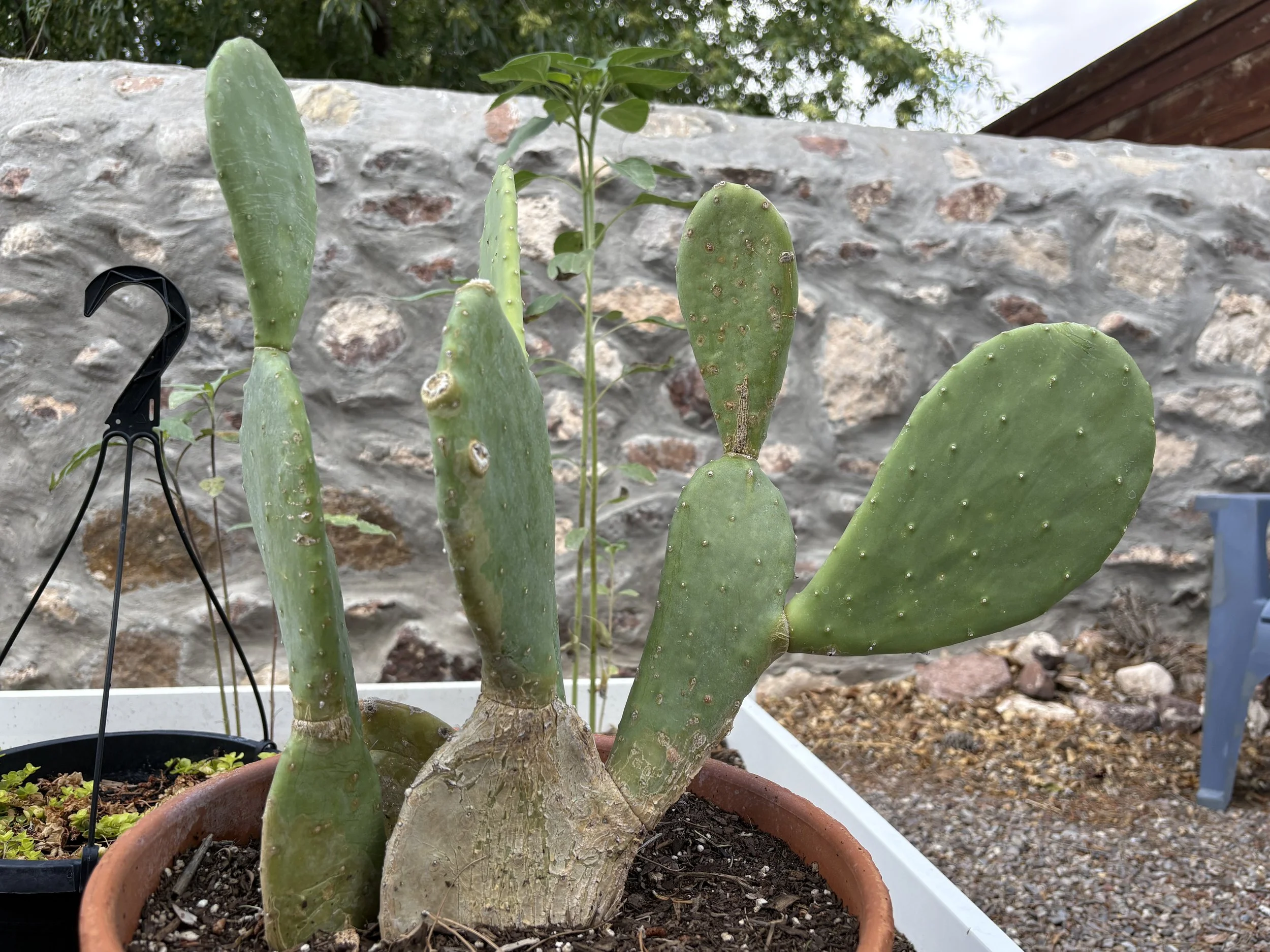
Natalie Merchant, grounded and pads outstretched
While peeved by the BS McLachlan and others faced from industry gatekeepers, the press, and the wider public, I was also moved by the unrelenting badassery these women exhibited in their music and their refusals to go down without a fight. Curled up in a fetal position, I lamented “I wish I could have gone to Lilith Fair…” Ok, not really, but close. I was reminded why I still return to many of these artists today, grasping for nostalgia, comfort, and just a little bit of hope. At the end of the film, Liz Phair, who had cemented her own place in indie music history since the early 90s, asserts, “The reason why people who weren’t even there feel connected to Lilith Fair is because it really does embody the world we wish existed right now for us.”
As I watched, I wondered how Phair had slipped under my radar in my youth. She fit the mold. Badass lady? Check. Great music? Check. Lyrics that I’d hide from my mother? Yes, please. I vaguely remembered Polyester Bride but couldn’t name any other songs. So I decided to casually venture into her catalog. What followed was a neverending tumble down a rabbit hole. Free falling, I was tossed around by songs that pleased my ears and punched me in the feels. Starting with her 1993 debut album Exile in Guyville, songs like Stratford-on-Guy and Shatter soothed the ol’ noggin while Divorce Song, Mesmerizing, 6'1” (relatable as a 5’3” shorty), and, let’s be honest, the entire album just rubbed me the right way. Liz Phair’s stories, melodies, and unique rhythmic guitar cut through bone and muscle and got straight to my heart.
As I quickly approach my mid-40s, Phair’s earlier albums are a harkening back to that comforting and timeless 90s sound that sits at the core of who I am as a human. These seeds were planted in my youth and tended throughout my 20s as I refined my garage rock and indie tastes, living in the Midwest for a decade and orbiting the local music scene in smalltown Indiana. And as my 30s brought a move back to the desert and unexpected challenges and heartbreak, the music of my youth was still there to welcome me home. That’s not to say my musical tastes are limited. I’ll defend ABBA to the death, get pumped for important meetings with 90s R&B jams, and want this played at my funeral.
For much of this year, Liz Phair’s songs have been keeping me good company. When an artist has their grasp on me, I give in easily and get comfy. Tuning out the world, headphones are my greatest companion. I rarely drive in silence and am a longtime lover of well-curated playlists for the road. So commuting to work a few days a week, Phair comes along for the ride, as I watch farmland and railroad tracks passing through my car windows, heading into New Mexico. Shower time playlists are essential, and she’s in the mix, with my poor but confident vocal accompaniment and cautious, lathered dancing. And you know you’re a middle-aged 90s kid when you find yourself watering your plants at 6:30am on a Sunday morning blasting Hole and Liz Phair through your earbuds while wearing jammies and Crocs, hair disheveled for the whole neighborhood to see.
In short, I had been sleeping on Liz Phair’s music all these years. And now, I’m just a lost cause. I’ve caught the Phair bug, baby, and I’ve caught it bad.
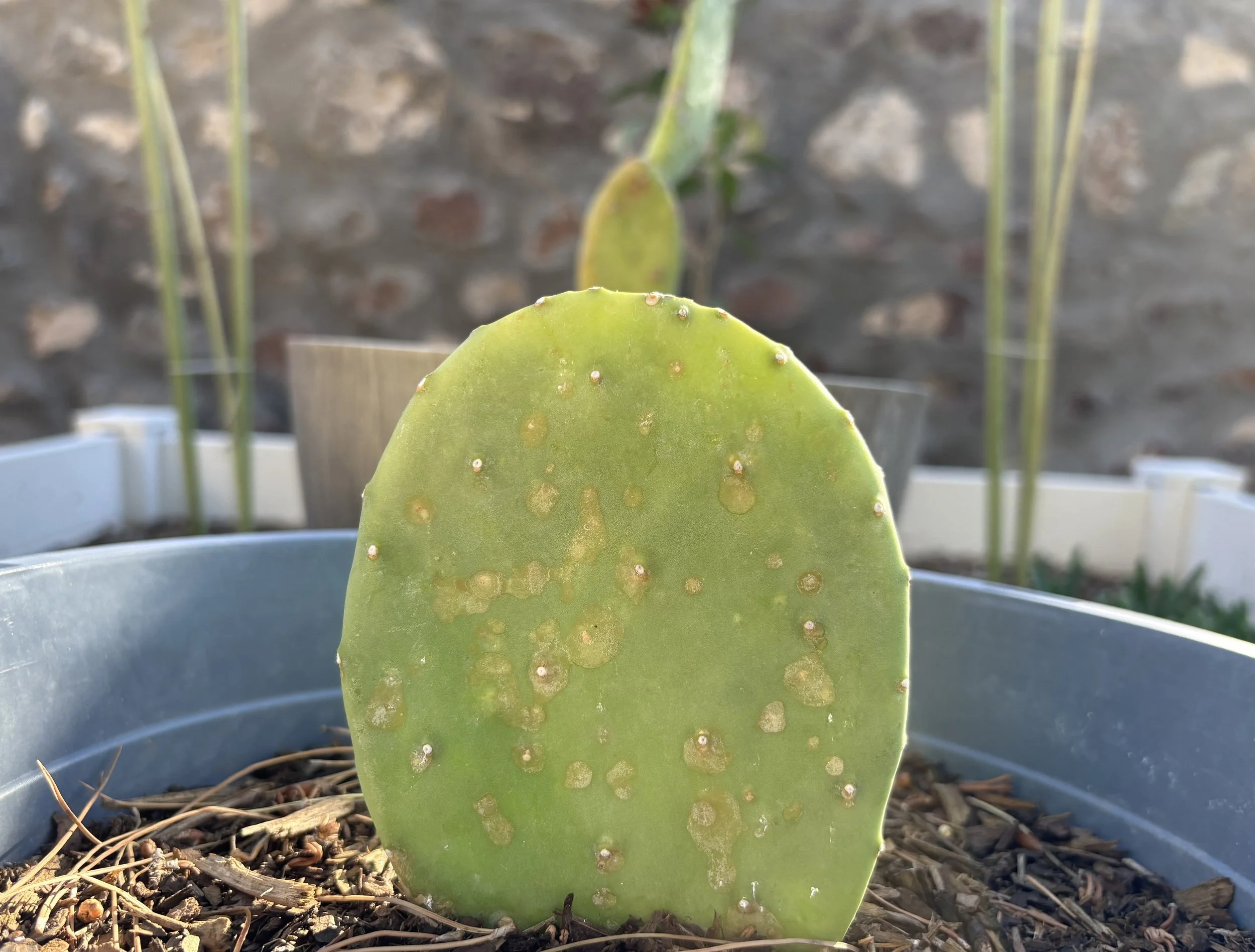
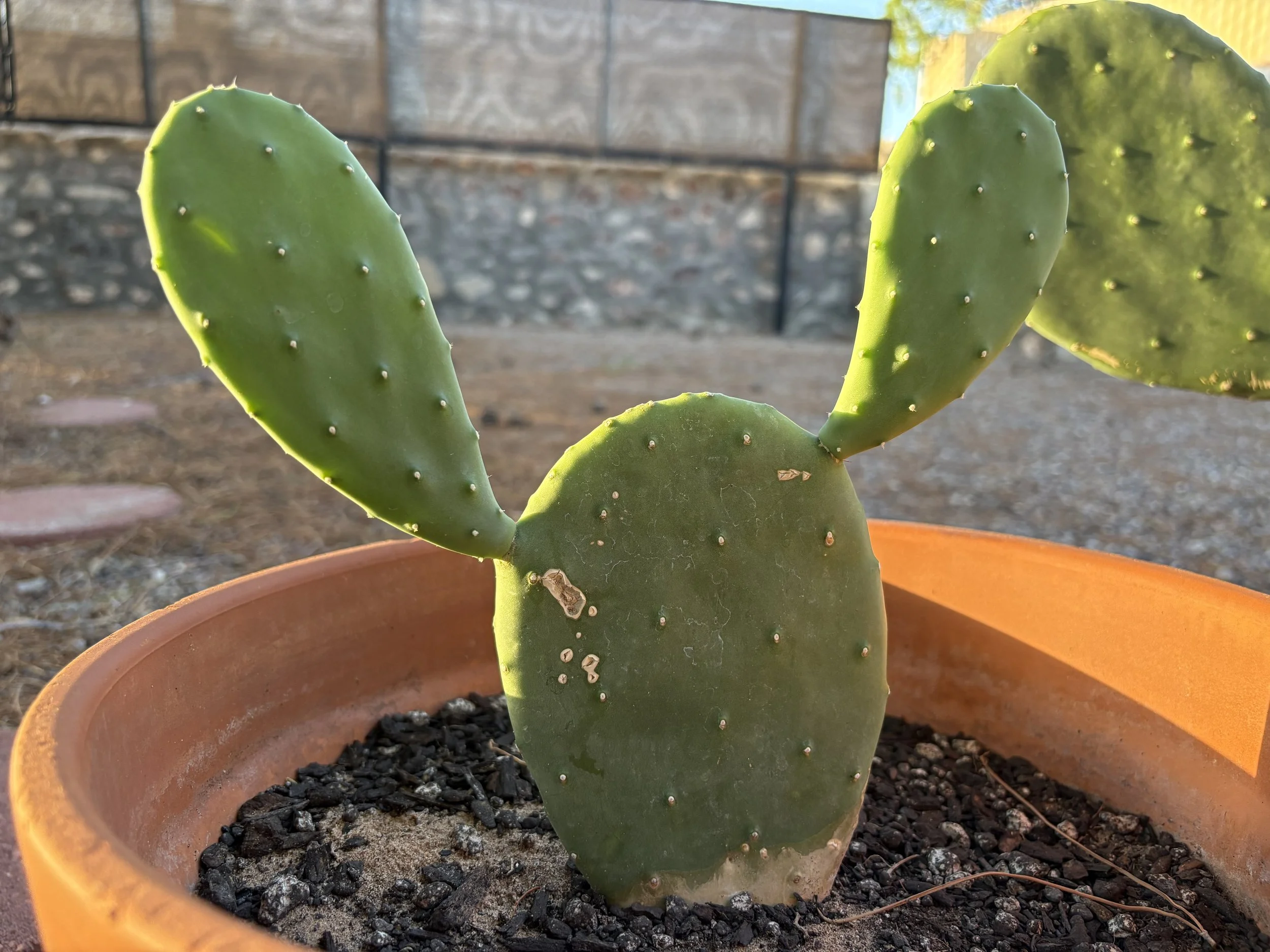
Liz Phair from mid-June (top) to mid-September (bottom)…lil’ shorty thriving like a champ
Kool-Aid Man
One weekday afternoon earlier this year, I decided to take a much-needed break from my job to step outside for some fresh air and sun. Still in the early days of my rabbit hole exploration into Phair’s catalog, I popped in my earbuds, stood on my back porch, and randomly selected a song from her eponymous album. As Little Digger began, I felt a wave of emotion. Not a calm, soothing, rhythmic wave. Nah, more like a 150-foot breaker that’ll pummel your ship. Think Poseidon Adventure. As my throat tightened, my eyes filled with tears. Despite my efforts to keep them in, the floodgates opened. As I wiped snot from my nose, my pup, Vincent Van Dogh, came to my side concerned as to why his human was leaking water. As Phair sang “Now you’re thinking little thoughts about it, taking every inch of him in…what does it mean when something changes how it’s always been,” cinder block walls I had built for decades came crumbling down. Liz Phair was the Kool-Aid Man, and I felt like a kid whose couch fort had been demolished. Looking back now, I realize the repeated lyric “my mother is mine” cut deep given I almost lost my own mother in early 2024. I remember sitting in my car in the middle of the night in that hospital parking lot, letting out a scream so forceful that my voice went hoarse. I wasn’t ready to lose her and felt an immense protectiveness as I watched her in the ICU, the sound of her ventilator-assisted breaths and beeping of monitors filling the room. With this scar on my heart, I can attest that miracles do, in fact, happen. After a good cry on the porch, catching my breath, I begrudgingly uttered, “What the hell, Liz Phair?” As I wiped tears, I tried to rebuild those walls, working quickly to bottle everything up again. I had gotten quite good at that since childhood. But, with crumbled rubble in my hands, it was futile.
I found myself broken but opened. For decades, I avoided speaking about my experiences as a child of divorce, other traumatic events surrounding that time, and treatment I have experienced that I’ve only begun to name, all of which I’ve tried so hard to bury deep. So you can imagine the incredible discomfort I feel putting these words here. But what mental health and medical professionals couldn’t convince me of, for years, Liz Phair got to in under four minutes. A few days later, I reluctantly contacted a local practice that specializes in trauma-based therapy. To this day, I squirm in my chair when talking about the memories and traumatic experiences associated with my childhood and adolescence. I change the subject or crack a joke to sidestep the difficult conversations. “May I, instead, tell you about how I lie in bed at night thinking of the Titanic at the bottom of the Atlantic and the sounds she makes?” Most weeks I want to quit. And as my incredibly patient therapist asks me to share about certain experiences and feelings, I offer a song instead. “Look, let me just make you a playlist, and we can wrap this up.” But I’m trying. And I think that counts for something.
I share this story as one example of the power of music–something we sometimes speak of in a flippant or saccharine way. But there really is something to be said about the role music and art, as a whole, play in processing and healing. Too often, life knocks us on our asses. It’s knocking me on mine right now, as I write these words. And, yes, sometimes the things we experience are darker and more catastrophic than we could ever imagine. Art won’t always provide resolution or way out of those moments, but, at a minimum, it can make them more bearable, even if for a brief moment. Art allows us to express ourselves, speaking through different mediums what we aren’t always able to say with our words. For me, art is a genuine expression that allows us to break any rules we are forced to follow otherwise, enabling us to find ways to be more at home in imperfection.
What I experienced with Little Digger, a song I now hold close to my heart, felt bigger than simply hearing a tune that made me emotional. It wasn’t a song from my past that took me back. I had never heard it before. It was physiological. It was a neurological break-in, and, while I still don’t fully understand the science behind it, the experience opened up something in me that had been bolted shut with makeshift padlocks for decades. It also further validated my determination to understand sound and its impact on our brains and the deeper corners of that organ I still struggle to understand the most–the heart.
Jupiter Swirls
Earlier this year, I had to get an ultrasound. Lying on a table with my shirt lifted and jelly on my belly, I watched the sound waves on the screen as the tech moved the wand across my abdomen. Mesmerized by the pulsating beats of my innards, it hit me that our bodies are a chorus of their own–blood flowing, the lub-dub of the heart, air passing through the lungs, muscles contracting, vibrations. It’s all there. I imagine our brain filters this internal symphony just so that we can function on a daily basis. But in just the right quiet moment, we can hear it. Our bodies also alert us with sound when something is off–the occasional joint pop, the sloshing of a heartbeat that can signal a murmur, the ringing of tinnitus, and the dreaded spontaneous gurgle just before a rush to the restroom. Sound is a part of us at our very core.
To say I have a sensitive ear is an understatement. In 2022, I received an unexpected diagnosis, confirming my brain is running on a different operating system, which also affects how it processes sound. In a crowded restaurant, I have to work extra hard to understand what the person in front of me is saying, filtering multiple conversations and noise around me. Wind is my nemesis and not just because I’m small and a strong gust can catapult me into orbit. But increasingly aggressive windy days here in the Chihuahuan Desert make it difficult for me to focus, and I easily become dysregulated. The movement of others in nearby rooms, the humming of electronics, a low radio playing at work…I hear everything. And yet, so many sounds calm my hyperactive brain and tune out a world that is just too darn loud. Ambient music and trip hop soothe my nervous system. It’s not always the words alone that comfort but sometimes the way a song is sung or the repetition of certain phrases and melodies. And so, I lean into both the challenges and the joys of sound on a daily basis. It isn’t always easy, and living like this is often isolating, especially when no one around you can relate. But each day and through adaptation, creativity, and the wonder that is earplugs, I am flipping the script as I go and always chasing more sounds to connect with.
Cue Liz Phair (yep, once again). I first listened to 2021’s Soberish early in my rabbit hole excursion. I think the trust we build with an artist isn’t bound by time. I immediately felt Phair was inviting me on a sonic journey, and I followed, no questions asked. Layer upon layer, the album felt like home to my ears, to my brain. From the competing vocals of Spanish Doors to the accelerating speed of Ba Ba Ba that makes you feel like you’re right there with her through the entirety of a short-lived romance, Soberish is just as much about sound as story. And headphones are a must. Without giving away its secrets, Soul Sucker plays with space in a way that makes me feel like someone is blowing on my neck (every time), while Lonely Street’s repeating high pitch vocals feel like an aural hug.
But the last track on the album, Rain Scene, is what solidified my deep appreciation for Phair as a lover of sound and as an artist.
“I was here in my house, and I had bought a 3D microphone thing that I can put on my ears that will record surround sound of whatever space I’m in. And I knew I wanted the approaching storm of ‘Sheridan Road’ to break. I wanted the storm to actually release at the end of the album. So, this unexpected rain happened here in Southern California, and I just practically threw clothes on and threw this thing on. And I was, like, yelling to my son, ‘I’m going out in the rain! I’m going to record the rain!’ And I just stomped up and down the street around my house, recording puddles and me splashing in puddles. And I had [Brad Wood] edit it in such a way that it took on a flavor of synthesizer of manipulated sounds at the end, and then I wrote a little song about it.” (LizPhair.net)
Living in the desert, I know, all too well, what it’s like to capture a rare rainstorm, grabbing a recorder in a spontaneous moment and throwing yourself into the joyful mix. An often solitary endeavor, Phair’s words offer a certain reassurance, a comfort in knowing one isn’t alone in chasing that chorus around us. Needless to say, I’d take an entire album of Liz Phair soundscapes (or anything experimental) any day.
~~~
How I see the world matters just as much as how I hear it. You can often catch me crouched on the ground, taking close-up photos of plants, every tiny pattern and design, and violating the privacy of countless praying mantises in my garden. Growing up, I was always drawing, and I was in time out a lot…and I mean, a lot. My father still talks about watching me standing in the corner, in trouble for who knows what, so pissed that I’d clench my buttcheeks together. My mother would be laughing so hard, he'd have to ask her to leave the room, so I’d take my punishment seriously. But I wouldn’t. When they weren’t looking, I was doodling on the walls in crayon. My grandmother always encouraged me to become an artist. Up until her last year on this earth, she’d ask if I was making money from the doodles in my sketchbooks, asserting they were better than anything in the books on her shelves. First, she was too kind, and second, I was not making a dime. Sorry, Margarita.
Recent health issues have barred me from biking and hiking for some time. As someone who needs to be physically active for my own sanity (writing this as my left leg bounces at full speed under the table), I’ve been a bit stuck. And so, I’ve been turning back to art, throwing myself into experimentation. Since stumbling upon cymatics, the study of sound and vibrations made visible, during one of my many Google deep dives, I’ve been testing different ways to create paintings from musical vibrations. An exercise in trial and error (and with the meager budget of a nonprofit employee), this has involved canvases atop makeshift apparatuses found around the house and a lone, small JBL speaker with tiny subwoofers.
The first painting attempt happened to coincide with a visit by my mother this summer. Accustomed to her child’s strange ways, she didn’t question but rather sat by as a witness one late evening, as I mixed the paints, confident that this was it. With a large canvas propped above the speaker, nestled in a wooden box built by my grandfather, the amount of vibrations seemed just right, paint was just runny enough. I took a deep breath, pressed play, and poured. Tunes blasting, Phair’s voice echoing in the room (come on, did you expect anyone else?), we watched. … Nothing. Not a movement. Lovingly, my mother encouraged me to add more flow medium, a fluid additive that thins paint without losing its adhesivity. So I did. … Nothing again. Fail. We laughed. Now invested, she encouraged me to not give up. As I walked her out that night, she told me to keep her posted and sternly instructed me to not lose sleep over this. I assured her I wouldn’t.
Cut to after midnight, in my kitchen going through cabinets and pulling an assortment of plastic containers, music blasting in the house as I assembled pieces with painter’s tape and grabbed smaller canvases. “Ok, the subwoofers are tiny. Just gotta make tiny paintings. Gotta think small. You’re small. It works.” After a few days and various tests, the most successful setup ended up being a random plastic coffee can from my garage with the JBL standing up inside, secured with scraps of memory foam. Sometimes it pays to be a bit of a pack rat.
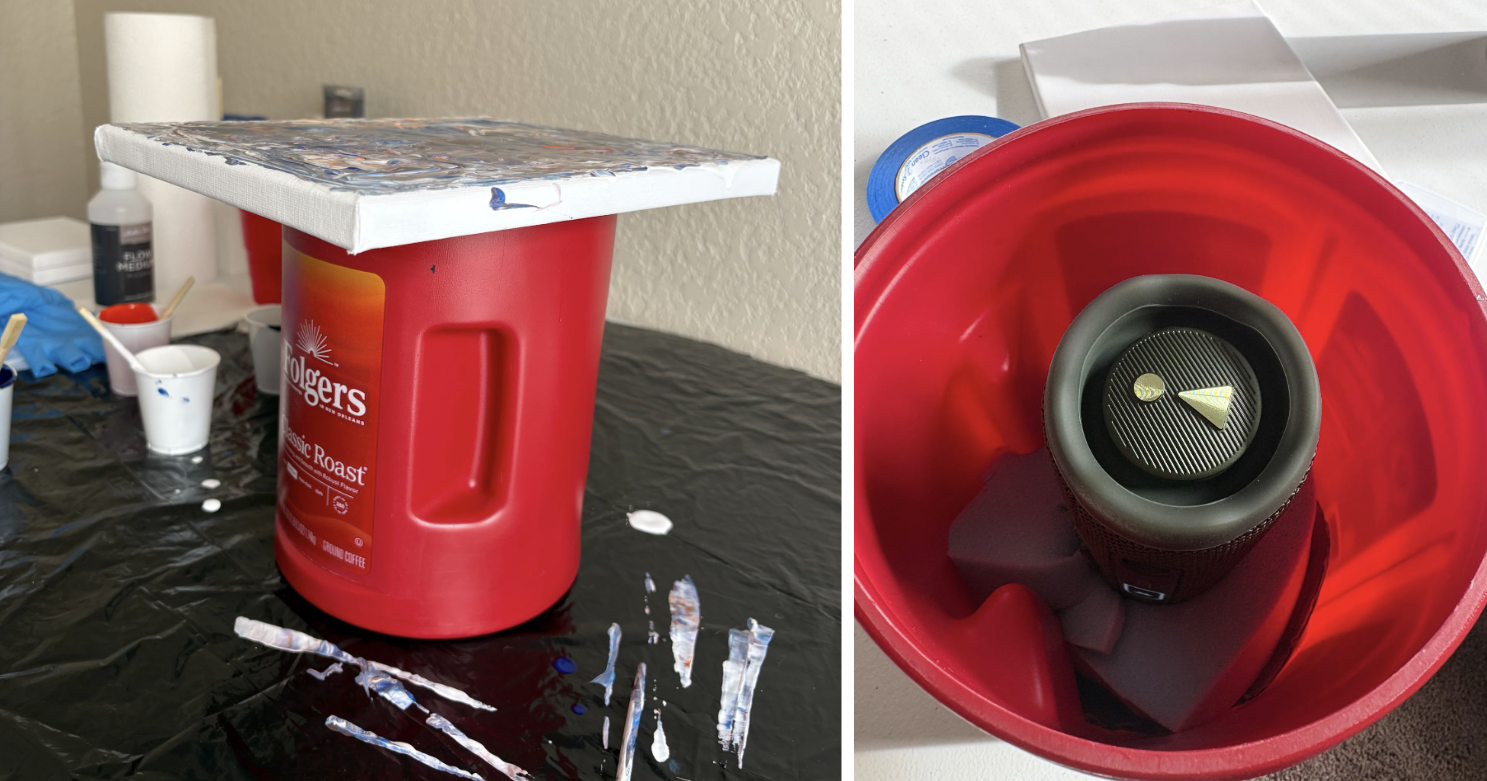
Like any true experiment, adaptation and spontaneous decision-making were part of the first successful attempt. Using a layer of white paint, mixed with flow medium, I poured dollops of various colored paints onto the canvas. While there was some movement, it wasn’t enough. On a whim, I grabbed more flow medium and poured it directly onto the gathered paint. And then it happened. The blobs of color bounced, creating bubbles and splashes, mixing together with each vibration. Giddy, I felt like that scene in Ghostbusters 2 when they make the toaster dance to Jackie Wilson. I grabbed a chopstick and started guiding the movement of color lightly, as to not interfere too much but rather create a sort of collaboration between my human hand and the paint on the canvas–a dance of sorts, creating what I am now calling “Jupiter swirls.”
Are these paintings masterpieces destined to be on display in the most prestigious art museums? Nah. But the joy I feel getting my hands full of paint again and seeing the patterns come together, creating something out of a certain love, it’s my humble attempt to both honor that which brings me joy and healing and to just create–to feel a sense of freedom, free from self criticism or external judgment. In a way, it’s a meditative practice, and, let me tell you, I suck at meditation. So with the same crazy-eyed (and -eared) determination to try different methods, the experimentation continues.
Tending the Garden Chorus
My backyard is often filled with a chorus. Fighting through the noise of nearby cars and sirens, a mixture of birdsong is a daily occurrence. From the rhythmic cooing of white-winged doves to the squawks of grackles and curve-billed thrashers, my yard is a happening place. I have countless stories of my interactions with these winged homies and fill the bird bath daily, often asking, “Ok, which one of you pooped in it this time?”
I’ve also buried more dead birds than I can count. I just can’t bring myself to toss them in the garbage. So, despite all my sins, I hope I have an in when I meet Saint Peter at the pearly gates. From dust to dust, right, Pete? One day, I noticed a young grackle on the ground. When I approached, it was lying on its side but breathing. Sensing my presence, it stood up and slowly walked to the back wall. Relieved, I hoped it was just young and taking its time to take flight. But when I checked on it later, I knew something was wrong. The little strength it had earlier was gone from its small body, and it was on its side again gasping for air. I stood still. Everything went silent, and my eyes began to fill with tears. Suddenly, I heard distressed screeches from a branch above me. With the sounds of parental mourning echoing, I kept a distance but locked eyes with this young bird, torn up that there was nothing I could do to help. It continued with a labored breathing that broke my heart into pieces. Each gasp slower than the one before. I did not look away for a second. “You’re not alone. We are here.” Within minutes, it took its last breath. Once again, I’d grab the shovel and gently lay it in its resting place nearby, saying a short prayer.
Tending anything takes patience, adaptation, and surrendering. I’ve had to let dying plants go and sit with the discomfort that, despite all my efforts, they weren’t thriving or had succumbed to the elements or pests. Just recently, I had to let go of my agave, Spike, who has been by my side for 5+ years and “given birth” to multiple babies. She’s now at a farm in New Mexico where she can thrive, which, I know, sounds like a cliche but is actually true. Three of her babies remain in my backyard. So a part of Spike remains. Tending to plants is a battle as we contend with hotter and drier seasons, as well as other changing weather patterns across the globe that disrupt biodiversity and necessary balance. We can learn from the ways plants and wildlife adapt to climate change and other man-made shifts. In fact, it has been said that birds have adapted to human-made noise in different ways. But that doesn’t mean it is easy. Tending to our humanness is equally difficult. I had to let go that day with the young grackle–let go of the need to control, let go of my discomfort with tears and vulnerability. I don’t like to look at the wounds of the past. I don’t like to feel weak or vulnerable. In fact, I’m allergic to it. The healing of trauma and navigating this life as an imperfect human is its own act of tending…and it’s hard as hell.
And so I return to sound. I return to the music and stories that get me through it all, thinking back to how it all started in my mother’s womb. In this returning, I try my best to navigate a society I truly don’t feel I was built for, carving out my own little corner. We try to put things in categories, binaries, neat little boxes to make the world and our lives easier to digest. It’s understandable. But I believe that only by leaning into the discomfort of the messiness, the complexities, and the complicated layers, can we learn, grow, and expand our minds just a bit. And beauty can shine through those layers, like the layers of paint and color that had to come together to create one complete picture. Or a song that seems so simple but is composed of so much more–the way an artist can trick your ears into hearing a catchy hook, without fully comprehending the various sonic elements and shifts that went into its production. In my pea brain, I think our senses bring us back to our humanness. And, for me, sound is the most powerful and complex.
Vincent Van Dogh is losing his hearing. My sweet boy, who used to hear me opening a box of treats from across the house and come running, doesn’t notice when I come home now. I take caution as I approach, lightly waking him, his brown eyes slowly opening as he wags his tail. I think how my life would change if I lost my hearing, too. It could happen to any of us at any time. I can’t imagine never hearing music or those familiar voices again. I can’t imagine not hearing the bird songs outside my window or the river flowing those few months out of the year. While how I navigate the world would change dramatically, I don’t believe this would be entirely negative, simply a transition. I like to believe my initial grief would lead to action and a shift in understanding the world around me differently. Would I create from and rely more heavily on vibrations than I ever had before? Would I hold more tightly onto that which I could feel rather than rely on my ears? Would my brain remember those songs and play them on repeat in an effort to hold on? And would Liz Phair finally stop breaking my heart?
I am certain I’d find my way back to art again. The truth is it never left me. It’s always been deep inside, nestled right up against that deeply rooted love of music, of sound. But I’m not sure I would have found it in the same way, if I had not been cordially introduced to Liz Phair, that Kool-Aid (wo)man who turned my life upside down this year and continues to throw me for a loop. I’ve sometimes wondered if adolescent me needed her music that summer when everything changed. But, if I had to answer definitively right now, through all I have faced, I believe 43-year-old me needed her stories, her passion for sound, and her courage to be vulnerable through her art just a bit more, and, for once, the timing was just right. Did Little Digger cause some emotional damage, liable for a lump-sum amount of, let’s say, $5? Absolutely. But all is forgiven.
Thank you, Ms. Phair.
And, most importantly, thank you, Mom, for planting the seed and still being here, hell or high water.